Colombia, the Processing Paradise
Jul 24, 2025 · Yellow Rooster · 3 min read
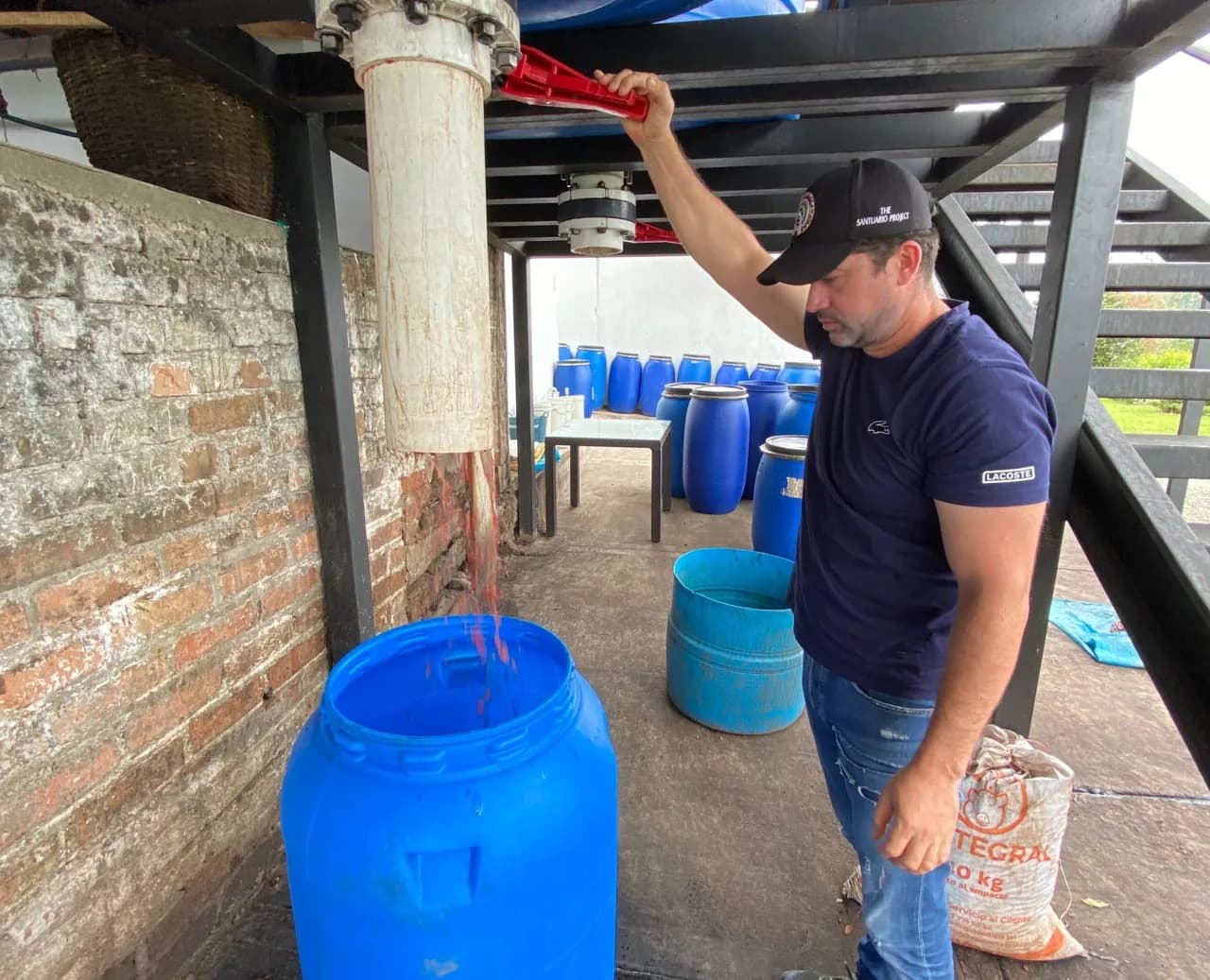
I still remember the first time I tried Edwin’s coffee.
Early on in the pandemic, barely a year into the launch of Yellow Rooster, we were still trying to find our groove as a business. Our export partner in Colombia at the time was a guy named Manuel Barbosa, a coffee-lifer who always seems to find himself at the vanguard of coffee culture in the country; from training and judging at the country’s barista championships to becoming the lead organizer of the 2023 edition of Cup of Excellence, we knew Manu knew his stuff.
It was early 2021 when he hit us up. “Guys, I think you’re gonna want to try some of these coffees from a friend of mine. We went to school together in Armenia.” A friend of Manu’s is a friend of ours, so we said “Sure, send ‘em our way!” Two samples from Finca Campo Hermoso arrived about a week later, and this friend’s name was Edwin Noreña.
Upon grinding the beans for the initial cupping, I knew something was up… My interest was piqued. I’d been in the game for awhile at that point, but I had never smelled anything like it in a coffee before. After my first sip, I literally dropped the spoon. Game over, this coffee was it.
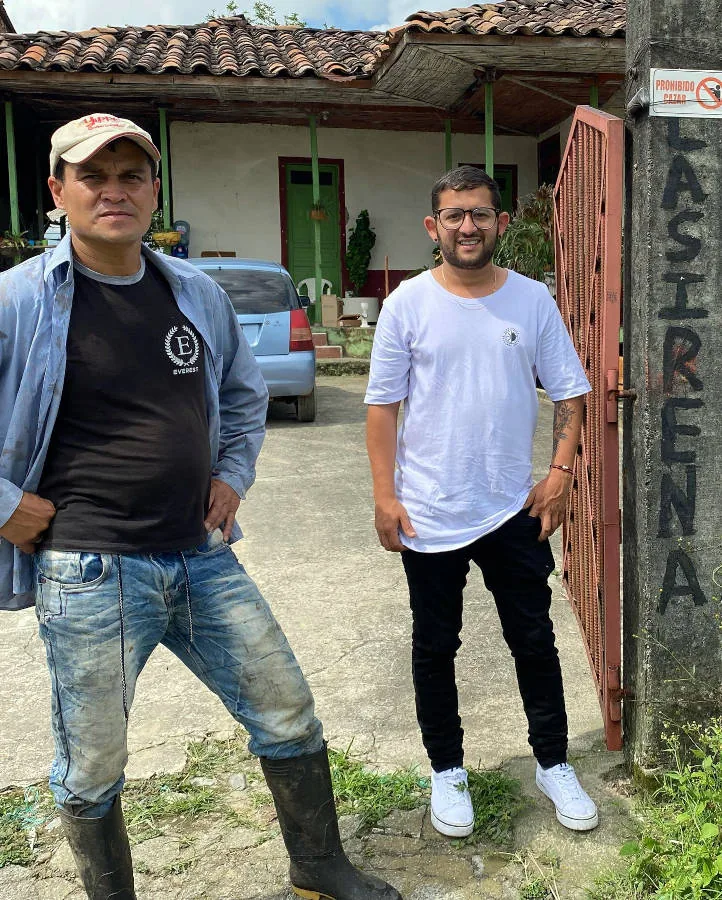
Fast-forward a year or two, and our team was back in Colombia for the Producer Roaster Forum in Medellín. I get a tap on my shoulder, and I turn around to see Juan Puerta, founder of Sens Coffee in Armenia, Quindío. Juan and I had met previously when he was a lab assistant and quality control manager for another producer we work with in Armenia, so I was happy to see him and reconnect. He handed me a small bag of green coffee and mentioned he was working on his own project now, and if we could give it a taste.
Juan was quickly positioning himself as a taste-maker in the co-fermentation space, and as a trained food scientist, he had the tools to know how to get the results he had been dreaming of. We took his sample of a peach co-ferment back to the lab, and were very pleased with the results. Blown away, actually. It was peachy, but not aggressive — drinkable cup after cup in a world competing for every last available inch of our palate.
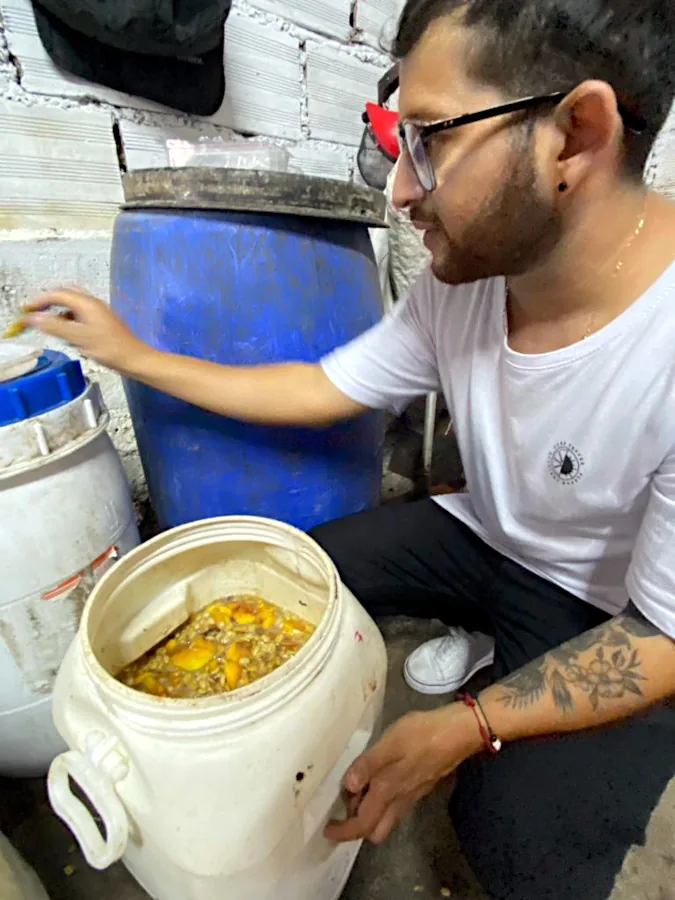
Edwin and Juan are leading yet another revolution in Colombia, where coffee processing is taking center stage. Taken in tandem with the focus on genetics and the anaerobic movement, the co-fermentation and bacterial/yeast manipulation school adds a third flank to the flavor arsenal that Colombia exports to the world every day.
The resulting cups at our disposal, although perhaps barely recognized by past generations as coffee, are not just the future of coffee — they are firmly a part of the present. Not only do we see these coffees routinely place in the competition circuit or the special release world, but we’re seeing the science and methods being implemented at other farms as a way to continue to make the profession and drink viable for years to come. In Edwin’s case, he is the youngest of 10 children born into the coffee business, yet the only one to remain working in coffee as an adult. And Juan, himself born into a working class family in the city with no background in coffee to speak of, was able to make Finca La Sirena profitable again after years of declining quality and production before he took over.
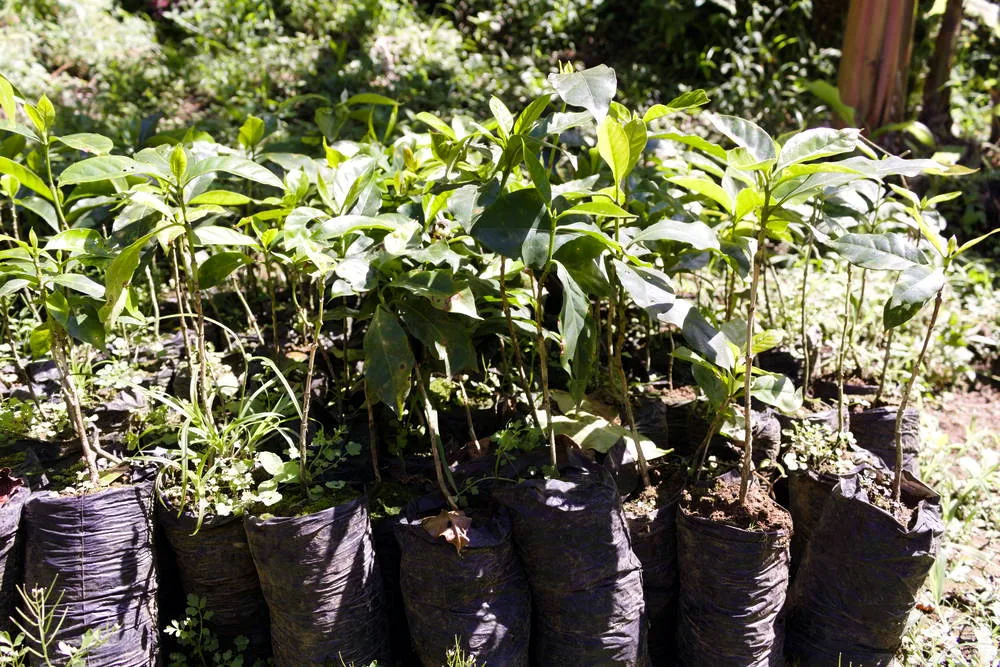
This new era of coffee processing in Colombia represents for many the only way to keep coffee production a worthwhile venture in the long term. As the world warms and weather patterns change, pushing production higher up the mountain isn’t a realistic option to the vast majority of current producers. Science, technology and community-level application must take place in order to keep meeting the growing demand for coffee, in order to re-establish quality, flavor-forward production in lands that traditional methods no longer serve.
We believe these coffees are a part of that story, and that it’s a story specialty coffee consumers will want to taste and hear time and time again!
Text and photo credits: Joel Eastlick