Flavor Wars: Thoughts on Co-Fermentations and Market Access
Sep 17, 2025 · Yellow Rooster · 8 min read
Co-ferments — I have to admit, I was originally a skeptic. Maybe like many of us in our various “young and dumb” phases, I initially rejected the concept outright simply because it wasn’t a “purist” approach to coffee. (Keep calm, dear reader, as I have since repented for my sins).
Beyond the fact that I didn’t perceive it as purist approach to coffee production, the science wasn’t quite there yet, and it showed in the cup. As a barista and roaster in the mid 2010s, perhaps a few years shy of total social media ubiquitousness that eventually connected producers to end consumers like never before, these first attempts at co-fermenting coffee with fruit didn’t meet the hype with which they were presented. As the photos filtered in from Brazil, Costa Rica, Colombia and beyond of ripe tropical fruits being tossed in the fermentation tanks, the promise of juicy pineapple and sweet orange in the cup fell flat, as many of these coffees tasted, well, like coffee, and maybe a little worse.
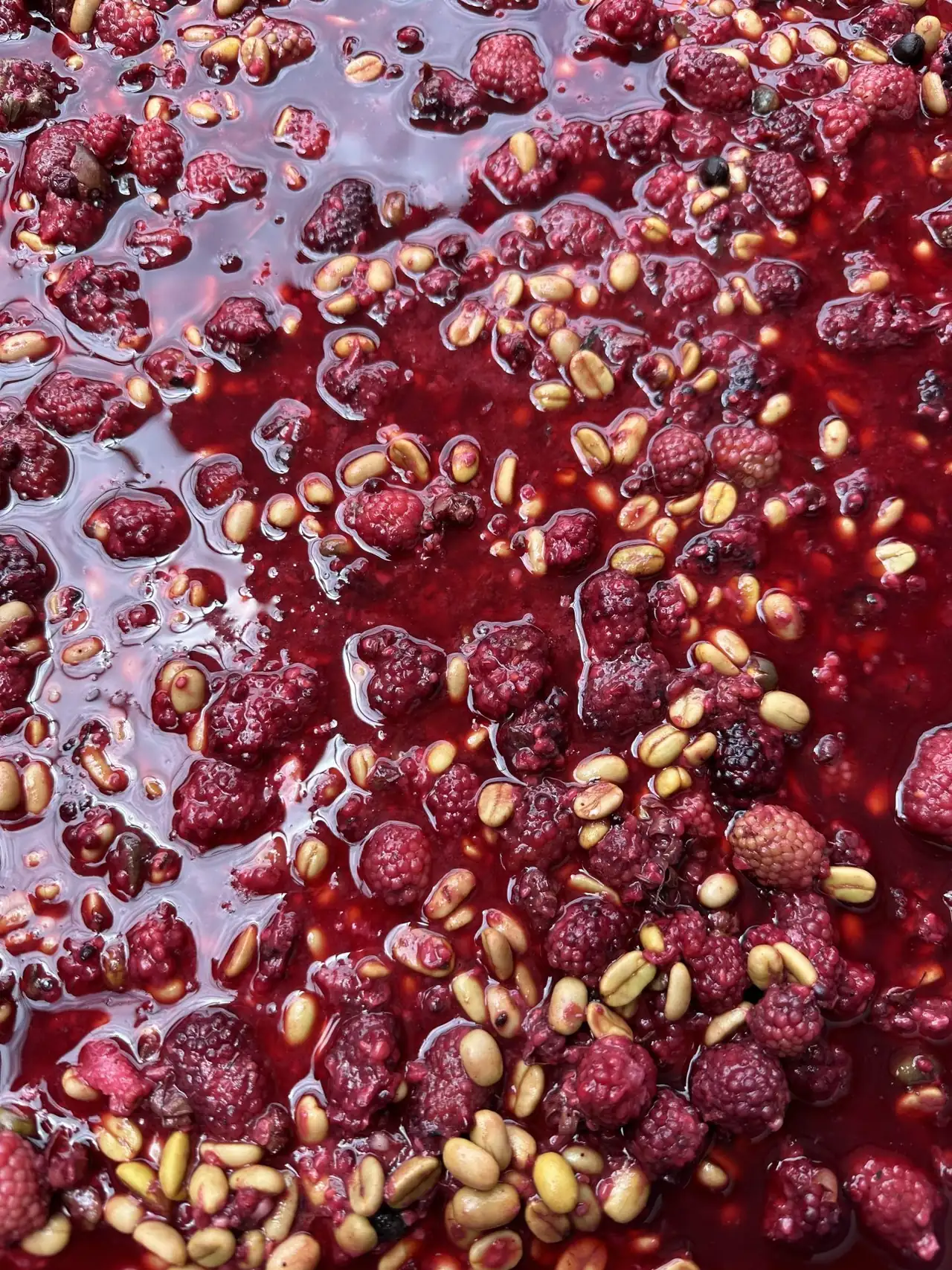
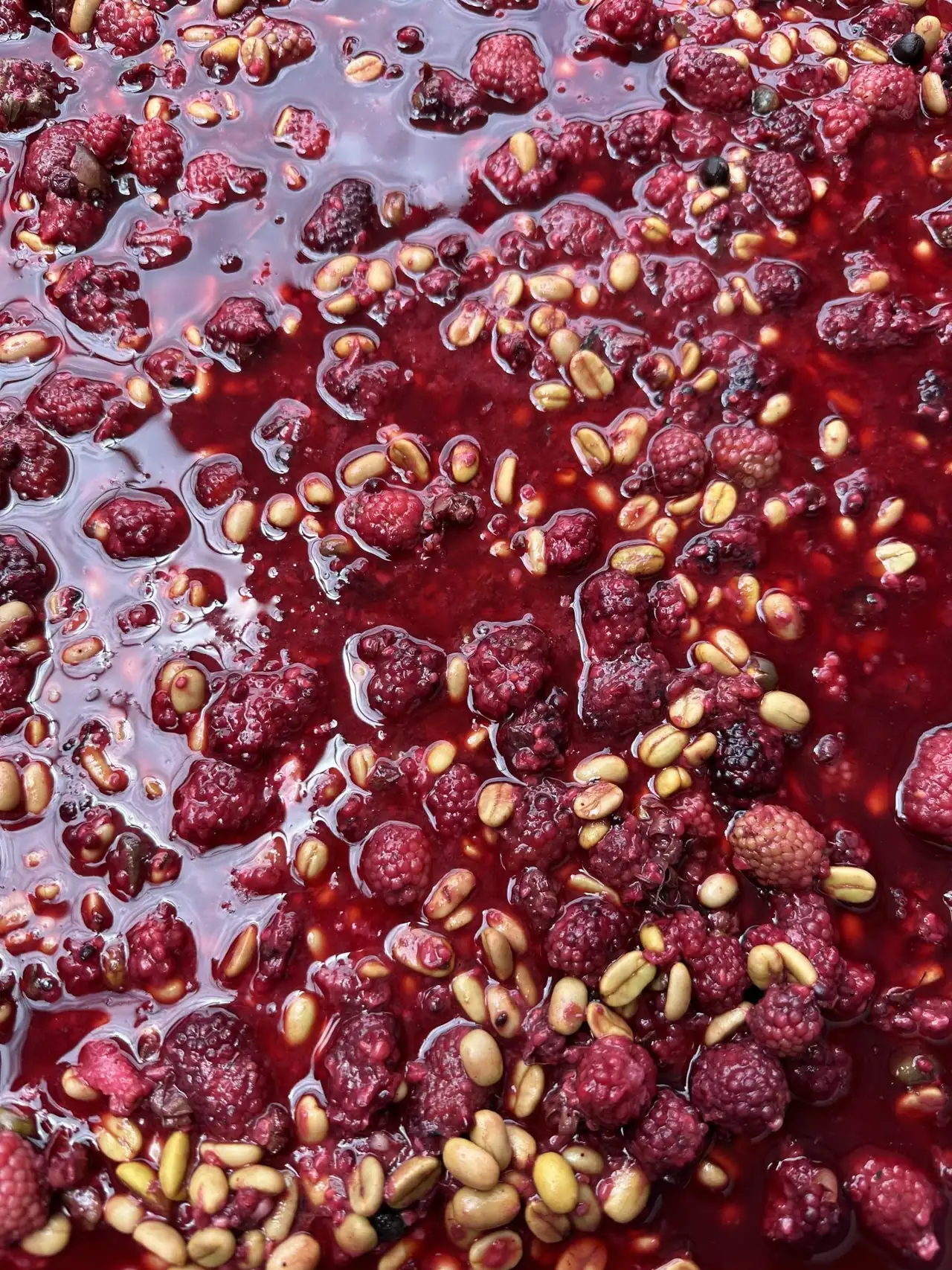
Raspberries co-fermenting with coffee in parchment
As it turns out, the mere act of adding fruit to a pile of fermenting coffee isn’t enough for the coffee to actually take on the desired fruit flavor — at best, what’s achieved is a disruption in the natural bacteria and yeast colonies already extant in the coffee farm, which may or may not have a role in flavor alteration (For more on this idea, check out Christopher Feran’s blog post on the subject).
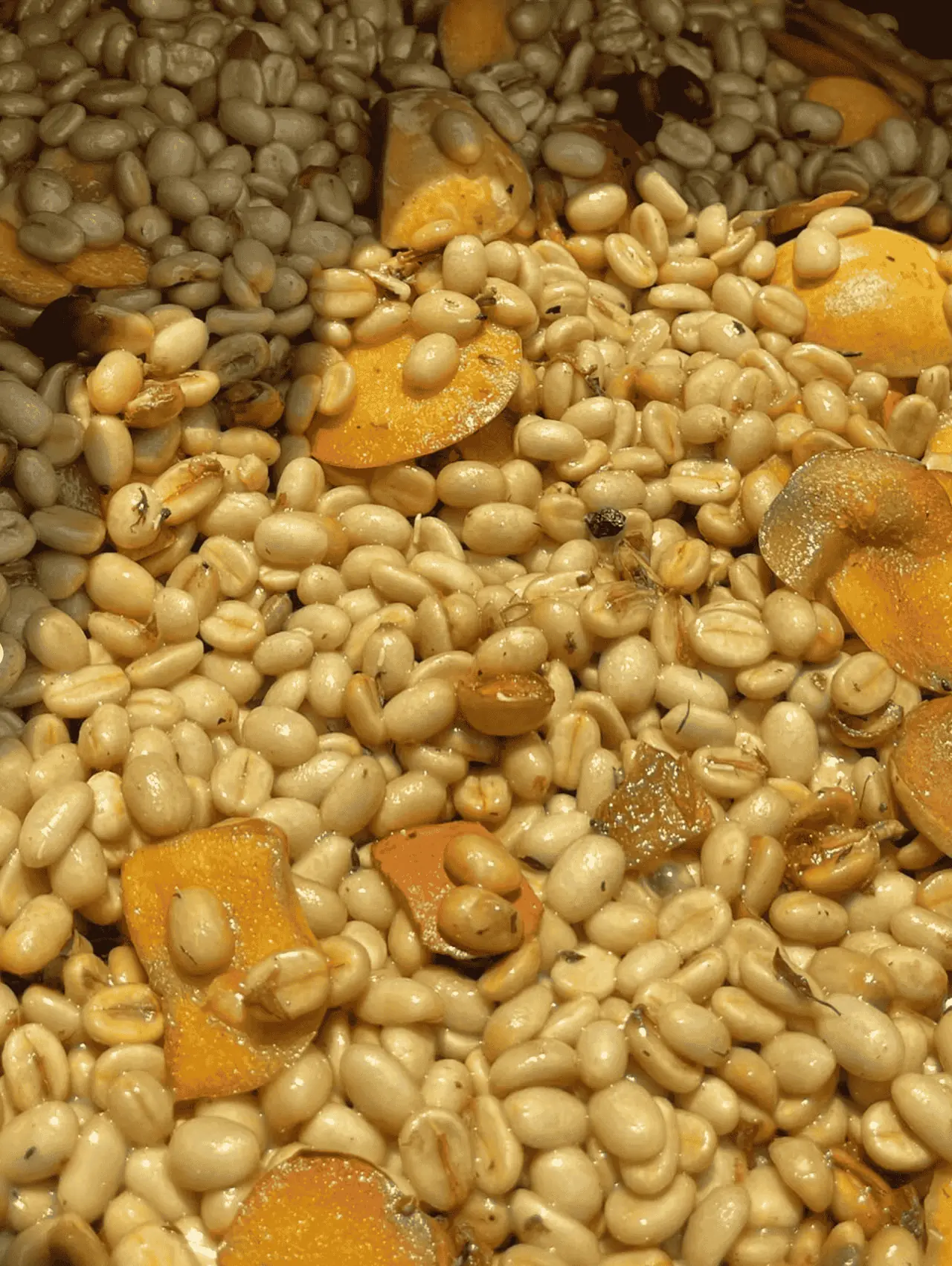
Peaches co-fermenting with coffee in parchment
If you want your coffee to taste like a specific fruit other than coffee, that fruit needs a catalyst (or a vehicle, if you will) for the flavor compounds to enter into and stay locked into the seed of the coffee cherry, which will then last all the way through the roasting and brewing process and into the cup of the end consumer. In the case of our long-term producer partner Juan Puerta, of Sens Coffee in Armenia, Quindío, Colombia, that vehicle is glucose. Juan graduated with a degree in Food Science and Engineering from the University of Quindío, and took over the operations at Finca La Sirena about three years ago to apply his theories of a scientific process called Osmotic Dehydration.
Although I’m not a scientist, this process basically involves the transfer (flow) of water from one place to another, hence “dehydration”. Specifically at Sens, this means the internal water content naturally present in the coffee seed flows out of the seed in the fermentation tank, and the glucose and fruit solution on the outside of the seed in the same tank flows into the seed, the glucose at a specific BRIX level being the reason why the H2O makes this exchange. For years now, we at Yellow Rooster have worked with him on educating roasters and distributing Sens’ coffees to the North American market to rave reviews. The first lot we agreed on was a peach co-ferment, a popular choice with an easily identifiable flavor, followed up by his legendary “Spumm” process, which is an amalgamation of rose petals, lychee and pear.
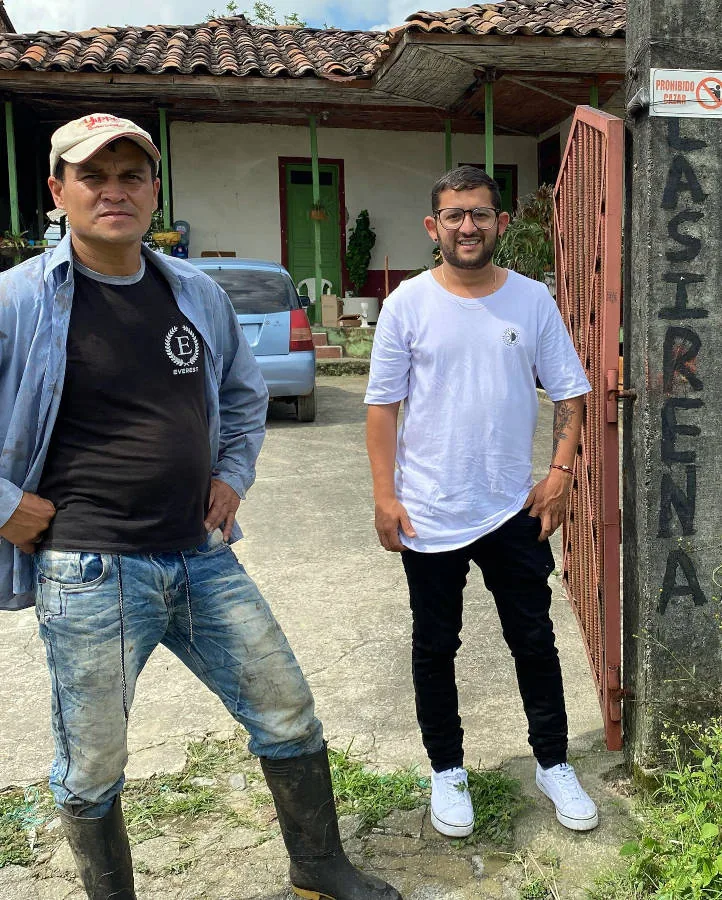
Juan Puerta (r) at the entrance to Finca La Sirena
Finally, I was convinced. The coffees were repeatable from year to year, which solved the initial problem I had with co-fermentation: Will this even work? Will this even be worth the effort? Given Juan’s science-based approach, he could crunch the numbers and observe the process to guarantee tasty results harvest after harvest.
But then, a second problem appeared: Why peach? Juan wasn’t the first Colombian coffee producer to toss peaches into the fermentation tank; it’s a very common preference among many co-fermenting experiments. But, peaches aren’t native to Colombia, needing extended periods of cooler weather to flower — while they can be grown locally, many peaches consumed in Colombia are imported from temperate climate regions found in Chile or Argentina, for example. Given that this “input” to the co-fermented coffee is itself traveling long distances, it naturally leads to a philosophical question, which is not too far off from the original question I had about co-ferments being non-purist: What happens to origin, variety and (*gulp*) terroir, when we’re just dumping internationally-cultivated, widely-known flavors into our coffee? Or was this just another capitalism-fueled exercise in quickly selling the most coffee as possible, consequences be damned?
While we can’t ignore the necessity of creating, buying and selling as a part of the coffee chain of command, an honest assessment of the so-called “Specialty Coffee” industry acknowledges that the values of transparency, traceability and farm-forward thinking are cornerstones of this niche trade sector since at least the early 2000s. As more conversations opened up along the supply chain actors around taste and “quality”, more and more folks took action to position their coffees in a more favorable light, usually relying on appeals to flavor perception. An argument can be made, then, that once a direct link was established between quality (and the perceived rarity within that definition) and priced garnered from such a coffee, we were collectively off to the races when it came to flavor in the cup.
And what is the natural response to these budding Flavor Wars? – New varieties: Never before has the average coffee drinker or rookie barista been so inundated with DNA-related vocabulary. Gesha, Pink Bourbon, Chiroso, SL-28, Obatã, Arara, Caturra… This has become crucial information recently in a way that few people could have imagined decades ago. – New processes: Washed, Honey, Natural, Anaerobic and hybrids of all kinds pop up like weeds in a garden. – New elevations: Coffee farms that soar well above 2000 meters above sea level are much more common than ever before, driven in part by the market demands and “exotic” curiosity related to the “elevation-hence-quality” mindset. Now, much ink has been spilled on the first two points. Varietal purists decry the explosion of Robusta-crossed varieties that make up the vast majority Arabica coffee produced across the world (as is the case with Juan, as he produces the Castillo variety almost exclusively), and processing purists make the case for insisting on water-intensive methods in places that are experiencing intensifying droughts. And the case with elevation is one of access: If we imagine a mountain as the rudimentary child’s drawing of snow-capped triangle, one can see there’s A LOT more room at the bottom of that triangle than the top. In actual practice, if the coffee industry demands that farms go higher, there’s only so much space we can go before we simply run out.
The flavor wars created a literal Hunger Games among producers, that, once again, favors those with capital, access, and flexibility to buy new lands or gamble on unproven varieties.
It was this exact conundrum that made working with Juan so appealing. His Finca La Sirena sits at 1386 meters above sea level and 95% of the harvest is the aforementioned Robusta-crossed Castillo variety — 50 years ago, this was considered a very comfortable altitude for high-quality Arabica production. Now, on a warming planet, farms at this altitude are faced with diminishing production volumes and decreasing cup quality. Many lower elevation farms across Colombia have either switched to other crops, been converted to ecotourism hotels, or have been sold altogether. This not only stops the passing of knowhow down to successive generations, it drives more folks away from the farms and towns across rural Colombia into the swelling big cities, compounding upon the already complicated urban dynamics. With Juan’s innovation, low-level farms have an avenue to remain or establish profitability in a way that has eluded them for years. Co-fermentation has been a return back to more democratized coffee farming; a small resistance to the seemingly unwavering demands of the Flavor Wars’ tastemakers.
The final piece of the puzzle to Yellow Rooster going all-in with Juan was ready to fall into place: The science was established, the cup quality was greatly improved — but how can we avoid losing our collective souls to the Flavor Wars and bring a sense of terroir and “place” to these “enhanced” coffees? Sure, as it turns out, canned blueberry pie filling tastes great in coffee, but what could be done to make this a truly “Colombian” coffee? Well, the answer was literally all around us.
On most coffee farms, you can find an abundance of other fruit trees growing everywhere, usually for the family at the farm house or the workers in the field to enjoy. All types of citrus abound, while tropical mainstays such as mango and passionfruit are easily within reach on many farms. So much so, that it’s common to see the fallen, squished and fermenting fruit on the earth below the tree, given that far more fruit was produced than the workers or even the local birds and other animals could timely consume. Colombia is indeed a tropical paradise, rich in alimentary abundance.
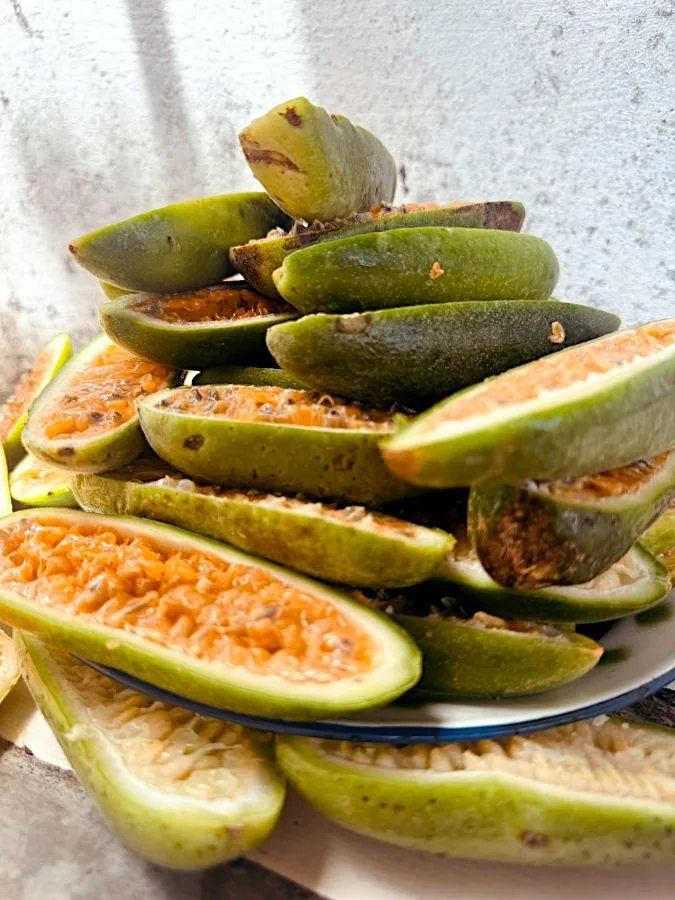
Curuba fruit split down the middle before heading to the fermentation tank
Beyond the abundance of quantity, Colombia is also one of the most biodiverse regions on the planet.
Fruits that would otherwise cost an arm and a leg as an import product elsewhere proliferate on rural farms and are consumed as a part of the daily diet. We asked Juan if we could start on some experiments with those fruits as well, given that their access was theoretically easy, cheap, abundant and sustainable. Our first successful attempt was with the Curuba, an oblong cousin of the passionfruit native to northern South America. This coffee was exactly what you might imagine a passionfruit to be — juicy, aromatic, pointed and tropical. This import quickly became a fan favorite, and we felt good about continuing to expand the options with Juan. That led us to our latest creation with Sens Coffee, using the Arazá fruit. Native to the western Amazon, this yellow-fleshed fruit about the size of child’s fist is packed with a tropical sour flavor, kind of a three-way cross between lemon, mango and peach. I’ve had it plenty as a juice at many coffee farms across Colombia, and Juan eagerly caught the vision and helped us get this going.
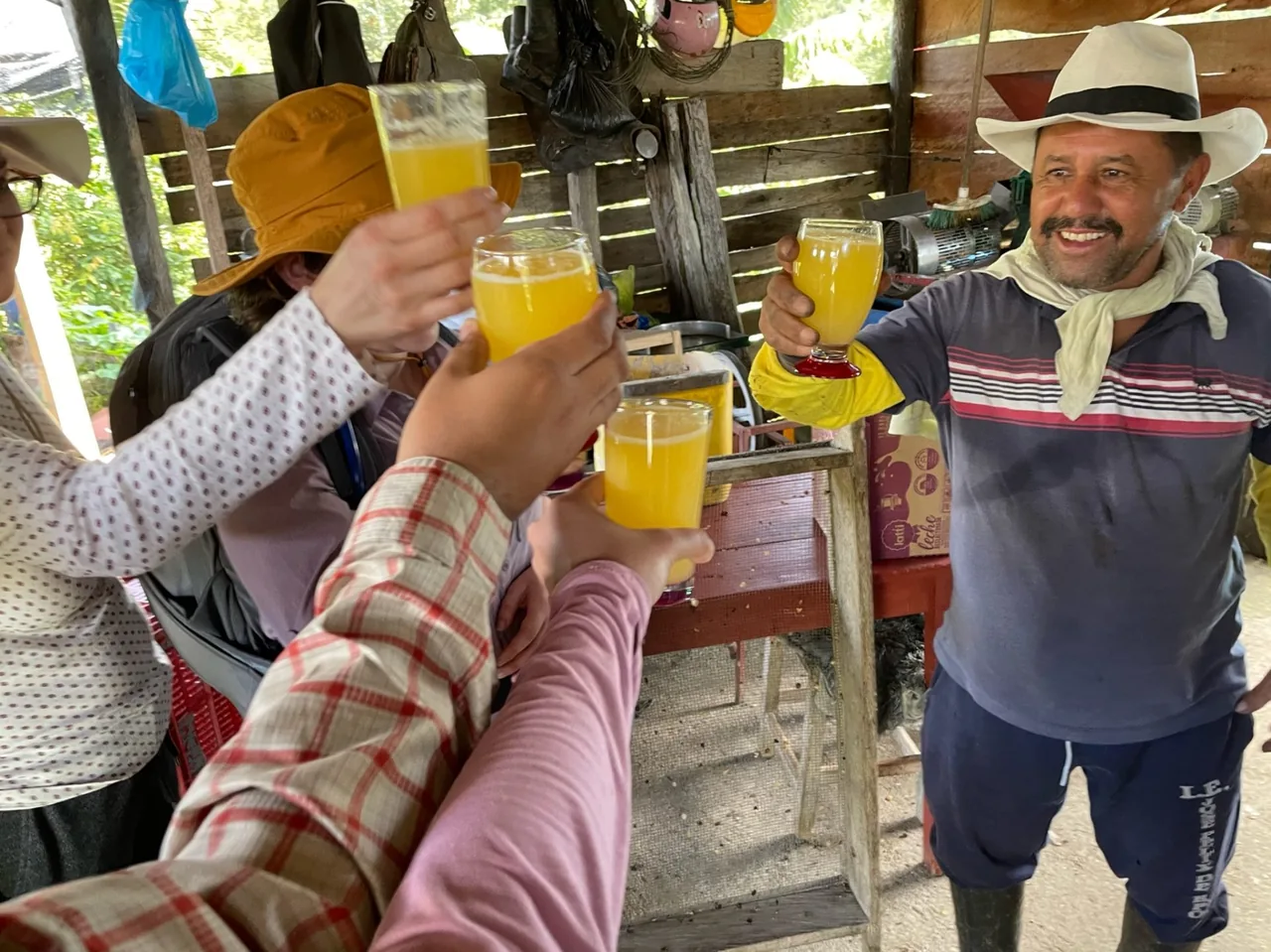
Arazá juice on a farm trip in Antioquia, COL
In a time where influencers, gatekeepers, tastemakers and trendsetters are all vying for our ever-fleeting attention, the work Juan Puerta is doing at Sens Coffee feels surprisingly refreshing, teeming with possibilities at every new horizon. Our latest import of Juan’s most recent harvest was our largest partnering yet, and what we’ve been tasting at the cupping lab has us buzzing for the next harvest already. It was a journey of a few years, but me personally and the whole team at Yellow Rooster finally came around to sourcing and supporting co-fermented coffees. The science is here, the cups are desirable, and the farmer is profitable. With that combination, there’s really no going back.
Text: Joel Eastlick
Photos: Joel Eastlick and Juan Puerta